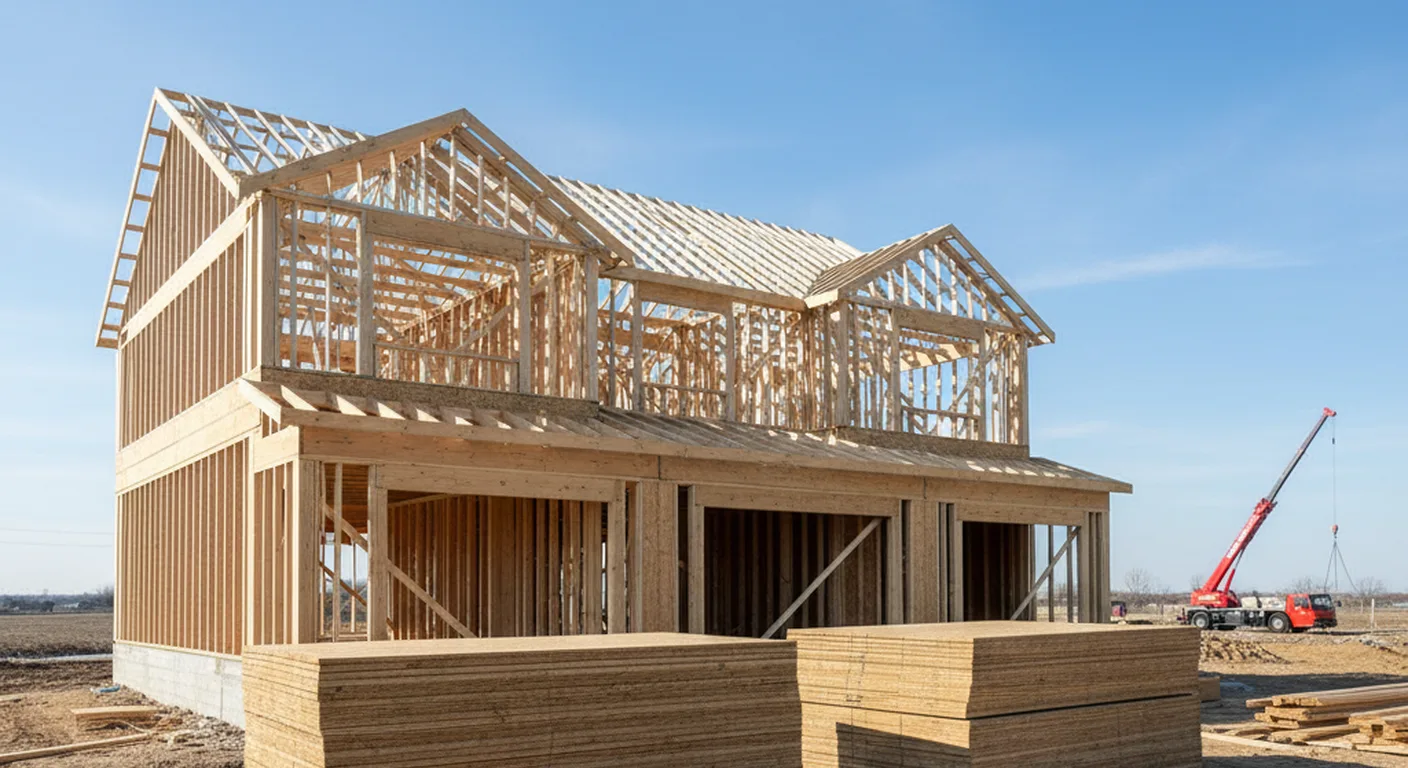
If you have been paying attention to construction prices in Illinois lately, you already know something is wrong. The cost of building a new home or renovating an existing one has surged well beyond normal inflation. A significant driver behind these increases is the current tariff environment, which has placed steep duties on the raw materials that go into every home built or remodeled in the United States. Neighborhood and housing data can be confirmed with the U.S. Census Bureau.
For Illinois homeowners considering whether to renovate before selling, or whether to sell at all, the numbers tell a clear story: tariffs are adding thousands of dollars to every project, and the ripple effects are reshaping the entire housing market.
How to use this guide
Use this guide when pricing, timing, costs, buyer behavior, and current market assumptions need to be compared before choosing a path.
- Property address, PIN if available, county, occupancy status, and target timeline
- Photos or video of condition issues, access limitations, utilities, and visible repairs
- Mortgage payoff, tax balance, liens, code notices, court papers, or title documents already in hand
- Preferred next step: direct offer review, call, listing comparison, or document-driven feasibility review
Use this guide when pricing, timing, costs, buyer behavior, and current market assumptions need to be compared before choosing a path.
Fast review matrix
| Decision point | What to review | Why it matters |
|---|---|---|
| Value and repair burden | Current condition, likely repair scope, access, photos, and buyer financing limits | The real offer depends on risk after closing, not only comparable sales |
| Title and payoff | Mortgage, taxes, liens, court papers, owner authority, and municipal balances | A closing can only work if payoff and signing authority are sequenced |
| Timing and occupancy | Move-out needs, tenants, vacant status, sale dates, notices, and access | Timeline can change which path is realistic: direct sale, listing, or professional review |
The Current Tariff Landscape for Building Materials
The tariffs affecting residential construction in 2026 are broad and consequential. They target the fundamental materials that form the skeleton and skin of every home:
- Softwood lumber carries a 10% baseline tariff, but Canadian lumber faces a combined tariff burden of approximately 45%. This matters enormously because Canada supplies roughly 85% of all U.S. lumber imports. The tariffs are hitting the primary supply chain directly.
- Steel, copper, and aluminum all face a 50% tariff. These metals are used in structural framing, electrical wiring, plumbing, HVAC systems, and roofing materials.
- Kitchen cabinets and fixtures imported from China are subject to tariffs ranging from 25% to 50%, depending on the specific product classification.
The result is a construction environment where nearly every material going into a home costs significantly more than it did two years ago.
How Much Are These Tariffs Adding to New Homes?
According to analysis from the National Association of Home Builders (NAHB), the tariff impact on a single new single-family home ranges from $10,900 to $17,500 in added costs. That figure accounts for the increased price of lumber, metals, cabinets, fixtures, and other tariff-affected components.
Across the entire residential construction sector nationally, the total added cost is staggering: approximately $30 billion in additional construction costs layered onto the housing market. These are not theoretical projections. They are showing up in builder bids, contractor invoices, and material quotes right now.
Lumber prices alone tell a dramatic story. As of January 2026, softwood lumber was trading at $872 per thousand board feet (MBF), a 17% increase over the preceding 12 months. For a typical single-family home requiring 15,000 to 20,000 board feet, the lumber cost increase alone runs into thousands of dollars.
The Impact on Housing Supply
Higher construction costs do not just make individual homes more expensive. They reduce the total number of homes being built. When the cost of materials rises sharply, builders pull back on speculative projects, delay planned developments, and cancel projects that no longer pencil out financially.
The Center for American Progress estimates that approximately 450,000 fewer homes will be built through 2030 as a direct result of tariff-driven cost increases. Construction sector output could fall by 4.1% over the next three years. You can compare your options against neutral guidance from the U.S. Department of Housing and Urban Development.
For the Illinois housing market, this has a significant implication: fewer new homes being built means sustained demand for existing housing stock. Buyers who cannot find or afford new construction will continue competing for existing homes, which supports pricing for current homeowners looking to sell.
What This Means for Renovation Costs
The tariff impact extends far beyond new construction. If you are an Illinois homeowner considering renovations before putting your property on the market, the math has changed considerably:
- Kitchen remodel materials have increased 15-25% due to tariffs on lumber (cabinetry framing), imported cabinets (25-50% tariff), copper and steel (plumbing, fixtures, appliance components), and aluminum (hardware, trim).
- Bathroom remodel materials have seen similar 15-25% increases, with copper piping, steel fixtures, and imported tile and vanity components all carrying tariff-inflated prices.
- Structural repairs involving steel beams, lumber framing, or metal roofing face the steepest cost increases, given the 50% tariff on steel and the 45% combined tariff on Canadian lumber.
A kitchen remodel that might have cost $25,000 in materials two years ago could now run $30,000 to $31,000 for the same scope of work. A bathroom remodel in the $12,000 range may now come in at $14,000 to $15,000. These are not marginal increases; they fundamentally change the return-on-investment calculation for pre-sale renovations.
Don't let inflated repair costs eat into your equity.
Sell as-is for cash and skip the expensive renovations entirely.
Call (630) 290-9959
The Case for Selling As-Is in 2026
Before tariffs reshaped the cost landscape, the conventional wisdom was straightforward: invest in kitchen updates, fresh paint, and minor repairs to maximize your sale price. That logic assumed reasonable material costs and a predictable return on investment.
In the current environment, that calculation has shifted. When renovation materials cost 15-25% more than they did recently, the gap between what you spend on improvements and what you recover in a higher sale price narrows significantly. In many cases, it disappears entirely.
Consider this scenario: you spend $35,000 on a kitchen and bathroom renovation using tariff-inflated materials. Historically, you might have recovered 70-80% of that investment in a higher sale price. But the $35,000 you spend today buys what $28,000 bought two years ago. You are paying more and getting the same scope of work, which means your dollar-for-dollar return has dropped.
For homeowners dealing with properties that need significant work, the economics increasingly favor selling as-is to a cash buyer who can absorb renovation costs through professional purchasing networks and contractor relationships. You avoid the upfront capital outlay, the project management headaches, the timeline risk, and the uncertainty of whether the market will reward your investment.
How Tariffs Affect the Broader Illinois Market
The tariff impact creates a two-track market in Illinois. On one track, new construction becomes increasingly unaffordable for entry-level and mid-market buyers. Builders pass along the $10,900 to $17,500 in added costs, which pushes new homes further out of reach for many households.
On the other track, existing homes become relatively more attractive. A buyer who cannot afford a new-construction home priced $15,000 higher due to tariffs will turn to the existing inventory. This dynamic supports pricing for current homeowners, particularly those with properties in the Chicago area and collar counties where demand already outpaces supply. Tax treatment of a home sale is summarized by the IRS on the sale of your home.
For sellers, this is actually favorable news. Even properties that need work have a built-in market because the alternative, new construction, is priced even higher. The key question is not whether your home will sell, but whether you should invest in tariff-inflated renovations before selling or let a buyer handle improvements at their own cost.
What Illinois Homeowners Should Do Now
If you are considering selling your home in 2026, here are practical steps given the current tariff environment:
- Get repair estimates before committing to renovations. Material prices have changed significantly. What you budgeted a year ago may no longer be accurate.
- Calculate the true return on renovation investment. With materials up 15-25%, the break-even point on pre-sale improvements is harder to reach.
- Consider the as-is alternative. Get a cash offer on your property in its current condition. Compare that figure against your expected net proceeds after renovation costs, agent commissions, and carrying costs.
- Factor in timeline. Renovation projects face longer lead times due to supply chain disruptions related to tariffs. A project that takes three extra months means three additional months of mortgage payments, insurance, taxes, and utilities.
The tariff environment is unlikely to change quickly. Legislative and trade policy adjustments take time, and the construction industry is already operating with tariff-inflated input costs baked into every bid. Making informed decisions now, rather than waiting for relief that may not come soon, puts you in the strongest position.

Frequently Asked Questions
How much are tariffs adding to the cost of a new home?
$10,900 to $17,500 per new single-family home according to the National Association of Home Builders. The range depends on the home's size, design complexity, and the proportion of tariff-affected materials used in construction.
What building materials are affected by tariffs?
Softwood lumber carries a 10% baseline tariff, with Canadian lumber facing a combined 45% tariff. Steel, copper, and aluminum face 50% tariffs. Imported cabinets and fixtures from China are subject to tariffs ranging from 25% to 50%.
Are tariffs making home renovations more expensive?
Yes. Material costs for kitchen and bathroom remodels have increased 15-25% due to tariffs on lumber, cabinets, fixtures, and metals. A renovation project that cost $25,000 in materials two years ago may now cost $30,000 or more for the same work.
Will tariffs affect the housing supply?
Yes. An estimated 450,000 fewer homes will be built through 2030 due to increased construction costs. This reduced supply could sustain demand and pricing for existing homes, as buyers who cannot afford tariff-inflated new construction turn to the existing inventory.
Should I renovate before selling given higher costs?
With inflated material and labor costs, many homeowners find that selling as-is to a cash buyer makes more financial sense than investing in expensive renovations. The return on renovation investment has narrowed significantly due to tariff-driven price increases on lumber, metals, cabinets, and fixtures.